Family & Relationships
Love can cultivate good conditions for growth without trying to control the harvest.
We often treat relationships like problems that should respond to enough effort.
If we explain clearly enough, perhaps the other person will understand.
If we remind often enough, perhaps they will change.
If we love generously enough, perhaps the relationship will become what we hoped it would be.
Sometimes effort helps.
And sometimes the harder we try to force growth, the more strained the relationship becomes.
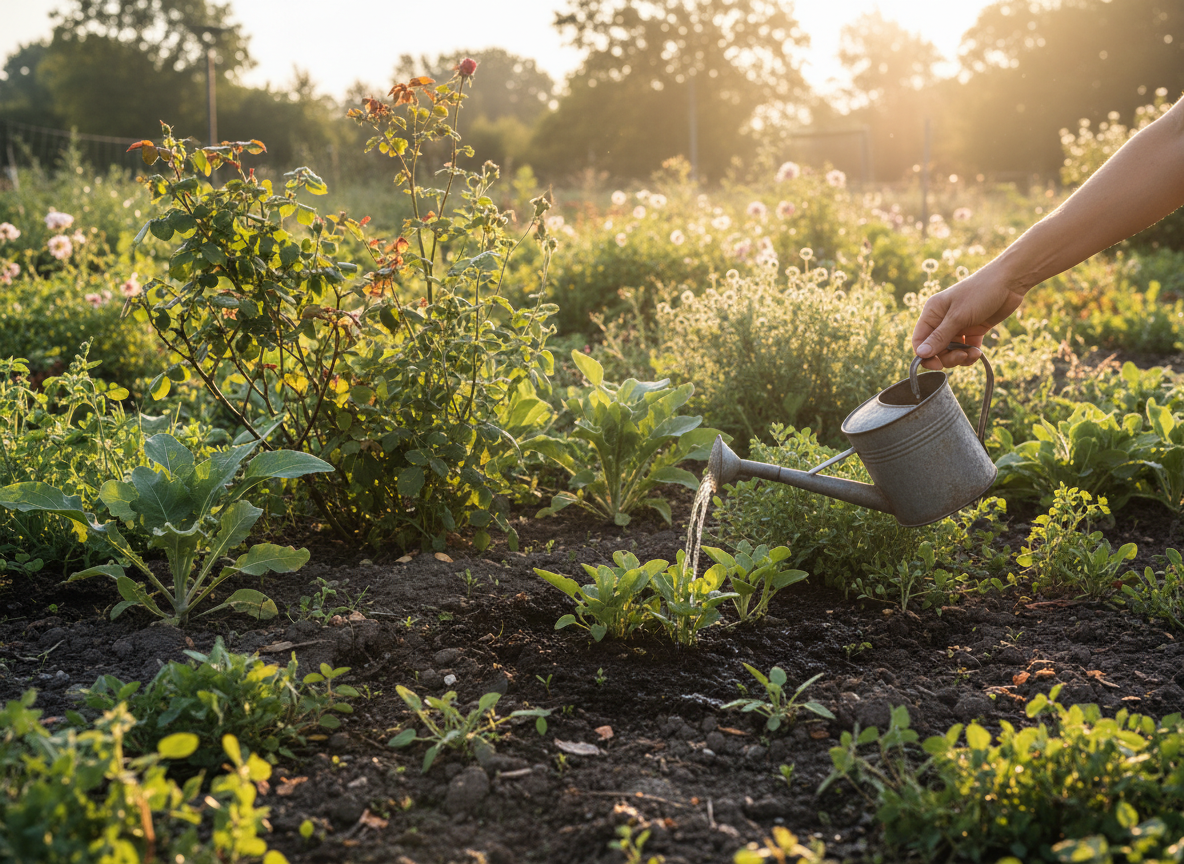
Relationships behave less like machines and more like gardens.
They can be tended. They cannot be manufactured.
You can plant and water without becoming the source of growth
In 1 Corinthians 3, Paul describes ministry through a simple image: one person plants, another waters, but God gives the growth.
Paul is speaking about the work of ministry, not offering a technique for family relationships. Yet the image contains a humility that travels well into the way we love people.
We participate.
We do not control the outcome.
In relationships, our participation matters. We can listen. Apologize. Tell the truth. Encourage. Set limits. Repair what we damaged. Create a safer atmosphere. Keep promises. Ask better questions. Pray. Make room. Return to a difficult conversation with more humility than we brought the first time.
Those things are real work.
But another person’s maturity, honesty, readiness, healing, choices, or response to love cannot be produced by our effort alone.
A garden is not neglected because it cannot be controlled. It is tended faithfully and allowed to grow.
Know the difference between tending and managing
Tending asks:
What can I do to make this relationship healthier?
Managing asks:
What can I do to make this person become who I think they should be?
The difference can be subtle.
A parent can guide a child and still leave room for age-appropriate responsibility.
A spouse can name a need without scripting the other person’s response.
A friend can offer concern without turning concern into surveillance.
An adult child can care for a parent without taking over every choice.
A leader can create conditions for honesty without demanding agreement.
Healthy relationships need both care and room.
Too little tending, and connection can wither through neglect.
Too much managing, and love begins to feel like control.
Some seasons need watering; some need pruning; some need patience
Not every relationship needs the same action.
Some relationships need more presence.
Some need a truthful conversation that has been postponed.
Some need an apology.
Some need clearer boundaries.
Some need less advice.
Some need practical help.
Some need time.
And some need us to accept that growth is happening on a timetable we do not control.
Patience is not passivity. In a garden, waiting is part of the work.
The question is not always, What can I do to make this change?
Sometimes the wiser question is, What kind of environment am I helping create while change remains outside my control?
PRACTICE THIS AT HOME
Think of one relationship that has been taking significant emotional energy.
Without diagnosing the other person, ask:
- What in this relationship genuinely needs tending?
- Is there something I need to say, apologize for, clarify, or stop doing?
- Am I watering something healthy—or repeatedly rescuing something the other person needs to carry?
- Am I trying to speed up growth because waiting makes me anxious?
- What belongs to me, and what belongs to God and the other person?
If a recent family conversation or meeting has been important, write one page beginning:
What God taught me through this conversation was…
Do not write only about what the other person needs to learn. Include what you are being invited to learn.
A short prayer
God of growth, teach me to love faithfully without trying to become the source of another person’s transformation. Show me what needs tending, where truth is needed, where a boundary is loving, and where patience is the work. Give me humility to plant and water—and trust You with what I cannot make grow. Amen.
Carry this with you
You can cultivate faithfully without forcing growth.
Rooted for Real Life
Good cultivation begins with attention. The Ministry of Listening goes deeper into that kind of presence. When care begins to become over-responsibility, read You Can Be Responsible Without Carrying Everyone.